MIDAS NOTES

Structural Filters in Practice

Three Real Cases Reviewed

Midas is not defined by the number of opportunities it encounters. It is defined by the discipline of structural entry.

Below are three real cases processed through our control and enforceability framework.

26.2.2026
Read more

Decision Infrastructure

The environment we live in is a continuous flow of informational noise.

Attention shifts, emotional reactions, rumors, hypotheses, and auto-generated content blend with facts and often appear as equivalent signals.

23.2.2026
Read more

The Institutional Layer of Trust

Trust is a foundational prerequisite for the existence of social systems within which economic models and financial instruments can emerge.

It precedes law, markets, and capital, and determines whether agreements that extend beyond immediate exchange can arise and be reproduced.
11.2.2026
Read more

An empire of meaning versus an empire of control

The resilience of systems after the loss of their primary carrier is one of the most reliable indicators of their true quality. History suggests that the longest-lasting empires are not those built on rigid control, but those that create meanings capable of surviving both systemic collapse and absorption by more powerful structures — without losing their core identity.

In this sense, the figure of Alexander the Great is particularly revealing.
6.2.2026
Read more

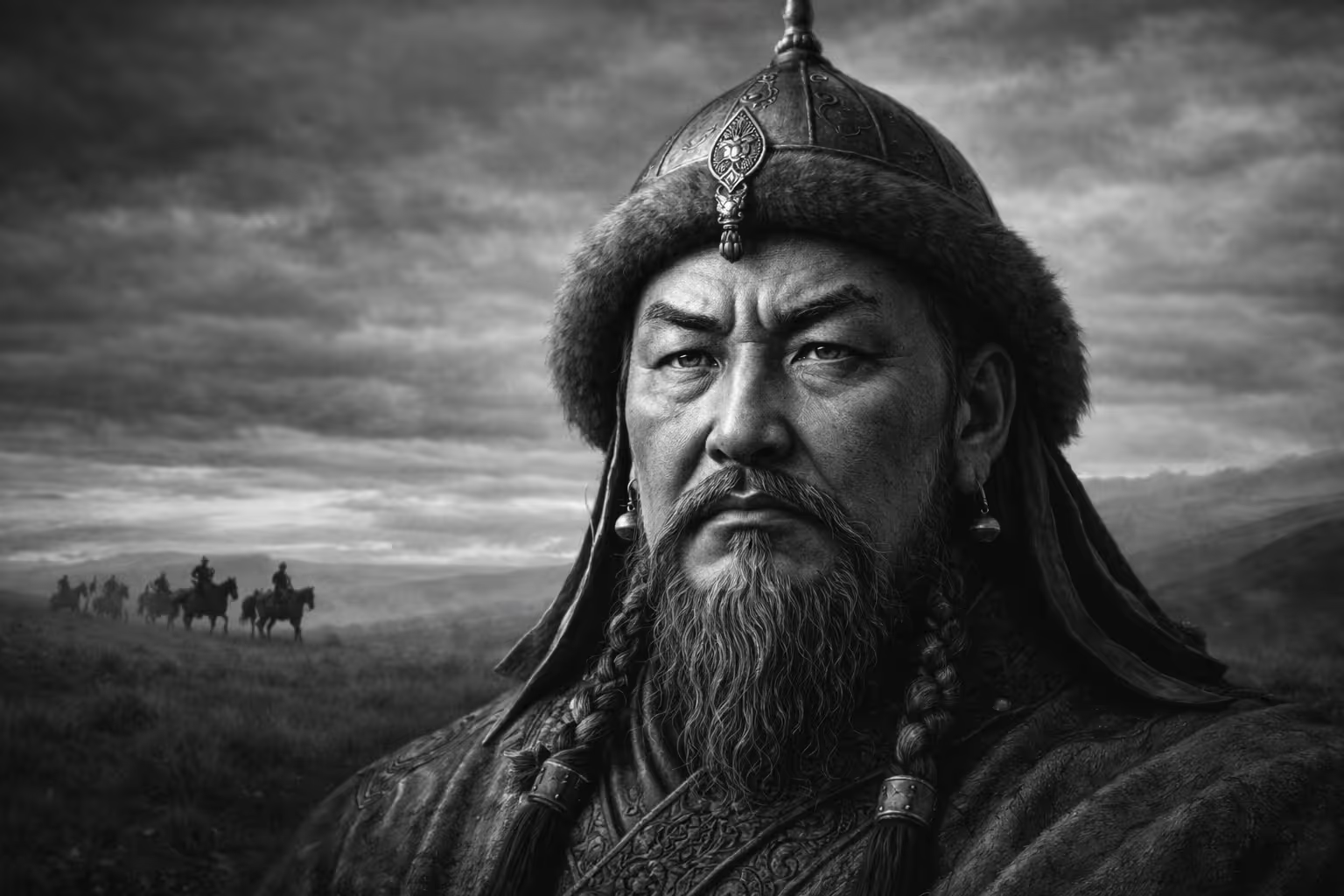
Genghis Khan: Order Born from Emptiness

History likes simplification. It prefers bright labels: “conqueror,” “barbarian,” “cruelty.” This is exactly what happened to Genghis Khan.

But behind the noise of conquest, a far more interesting question is lost: how is lasting order even possible in a world of total chaos?

This is exactly what happened to Genghis Khan.
2.2.2026
Read more

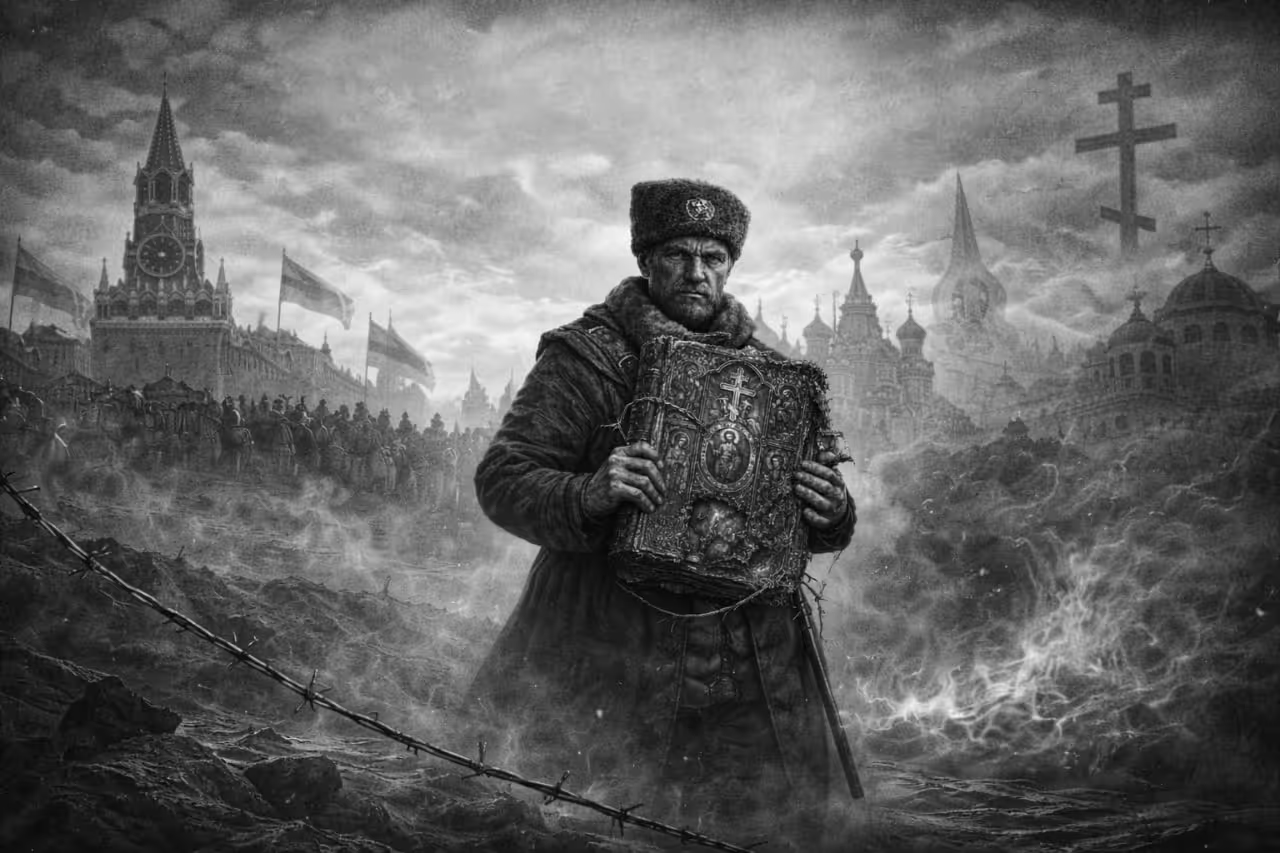
The Russian World as a Stolen Gospel

Poltava as Crucifixion, the False Apostolate, and the Rubicon of 2022

There are moments when violence is not the cause of history, but its confession. Poltava was such a moment. What occurred in 1708–1709 was not merely the defeat of a political project. It was a crucifixion of sovereign incarnation—a focused act that separated spirit from the right to become a system.

There are moments when violence is not the cause of history, but its confession.
21.1.2026
Read more

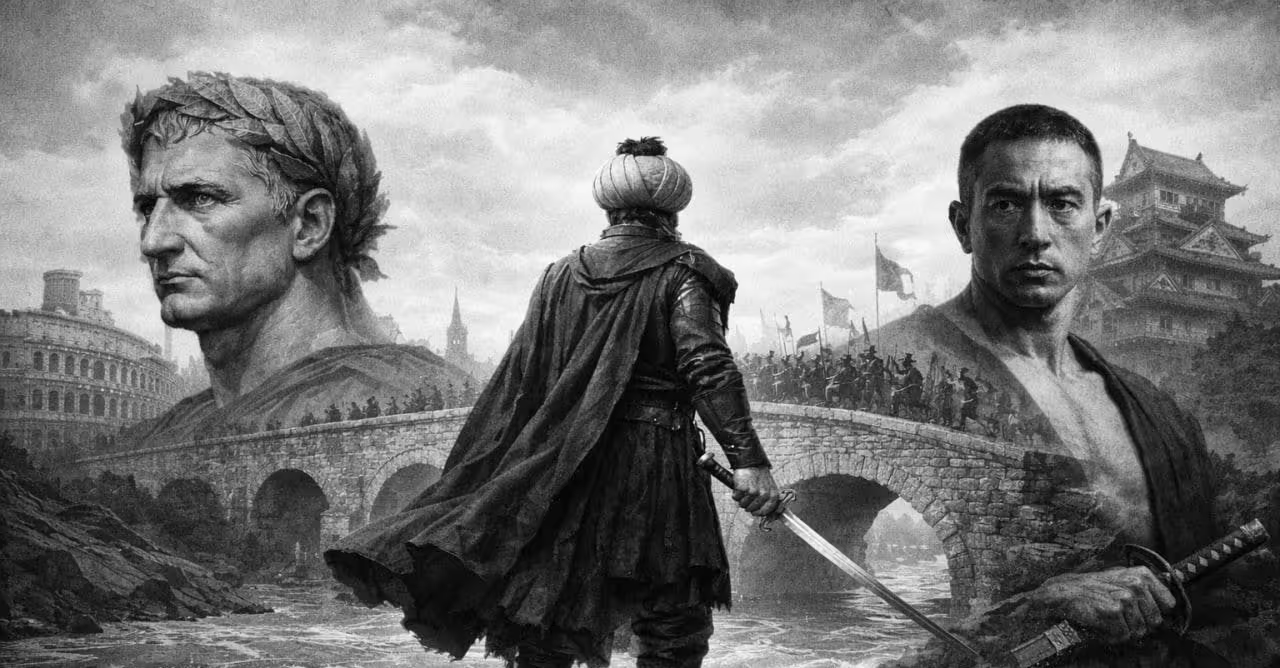
Three Architects and the Rubicon

Behavioral architecture of irreversible decisions

Julius Caesar, Mehmed II the Great, and Yukio Mishima act as system Architects within thesame behavioral model,

where the price of breaking one’s own architecture is the destruction of the agent.

This is not metaphor and not dramatization.

It is a structural law for figures operating at this scale.

Where do you close the form — on yourself, or in the world.
30.12.2025
Read more

The Equilibrium of Asymmetry. Mazepa

Ivan Mazepa stands at the boundary of two worlds — the imperial order and the nascent modern statehood. His figure is not about victory or defeat, but about the attempt to maintain balance between historical forces that do not acknowledge symmetry.


He acts in a field where loyalty is the currency of survival, and betrayal is a form of striving for freedom.

Can we be a state that defines its own asymmetry — not as weakness, but as a form of strength?
19.12.2025
Read more

Caliphates and Adaptability

No empire has ever lived forever, yet some systems learned how to outlast themselves. Caliphates are one such form: they did not disappear but rather flowed onward, shifting their outlines, centers, even their language, while preserving the energy of shared faith and exchange.

Whoever knows not only how to fight but also how to flowpreserves their world even after it is destroyed.
19.12.2025
Read more

Empires as Systems

Empires are not merely territories, armies, or economies. They are systems for organizing space and transforming natural chaos and dynamism into sustainable development and controlled flows of capital. They arise as a response to the need to structure the world — not a world that is falling apart, but one that is inherently discrete, individual, and richly diverse.


The empire of the future is not the power over others, but the ability to unite differences without destroying harmony.
19.12.2025
Read more

A Different Lens

People often ask what Europe expects from us.


But perhaps the more important question is what we ourselves aspire to.

But we are not an edge — we are a space of equilibrium, where a new model of coexistence can be born.
19.12.2025
Read more